Standing water, falling insulation, a torn vapor barrier and frozen pipes call for different fixes. Figure out which one you have, what Bend’s snowmelt, cold snaps and irrigation season do down there, and who to call.
Check it: fall + after thawPipes freeze: below 20°FUpdated October 20, 2026
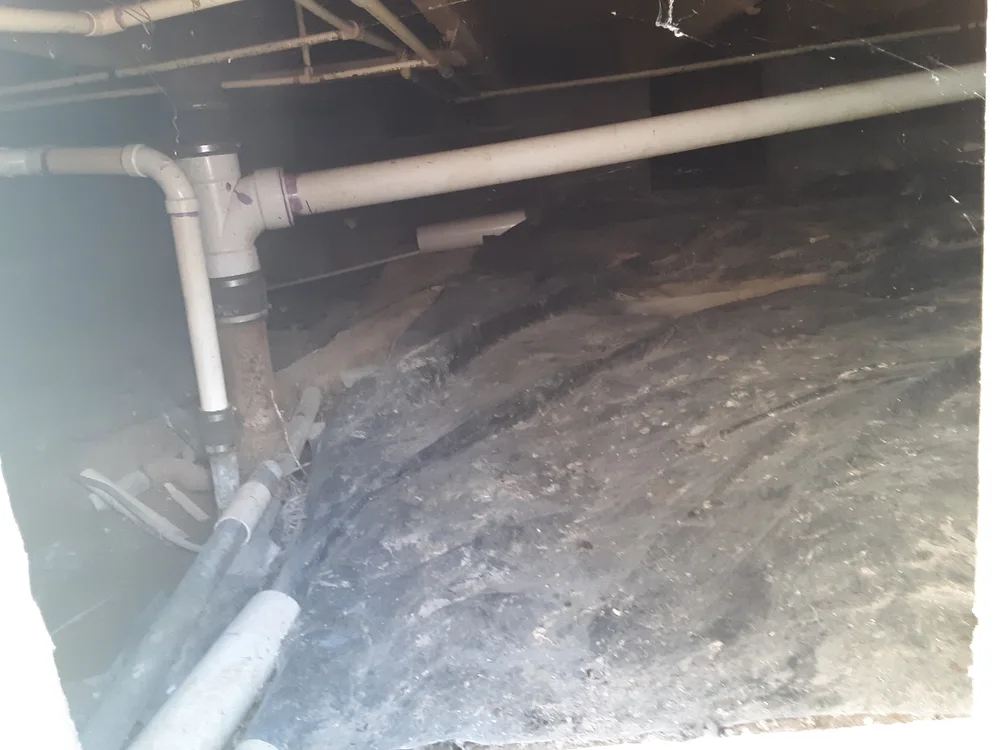
Photo: TradeCrawlspaces, CC BY-SA 4.0 (example outside Bend)
Made for BendLocal research. Useful context. No fluff.
Every company checked against its own websiteUpdated October 20, 2026
Most Bend homes built before the 2000s, and plenty since, sit over a crawl space: a low space between the dirt and your floor where the plumbing, ducts, wiring and floor insulation live. Nobody goes down there until something goes wrong. The trick is matching the fix to the problem before someone sells you a system you don’t need.
Water under the house right now?
Shut off the main water valve if a pipe is leaking
Stay out if there’s standing water near wiring, sewage or sagging supports
Call a plumber for the leak and a restoration company for the water
Take photos from the access opening for insurance, if it’s safe
Describe the source on the phone (pipe, snowmelt, sewage, sprinklers) so the company sends the right crew. SERVPRO of Bend lists 24/7 emergency service.
What’s actually wrong? Symptoms and likely causes
What you notice
Likely cause
Call first
Cold floors, drafts, high heating bills
Missing or fallen floor insulation, leaky rim joist, disconnected ducts
Insulation / home-performance company, HVAC for ducts
No water at a faucet on a cold morning
Frozen pipe in the crawl space
Plumber (shut off the main if it splits)
Musty smell in the house
Damp soil with no barrier, a slow leak, mold on framing
Restoration company for an inspection
Puddles after snowmelt
Downspouts, grading or an access well collecting runoff
Gutter or drainage work before any interior system
Wet spots in summer
Sprinklers, a leaking irrigation line or soggy beds against the foundation
Your irrigation company, then check again
Insulation hanging down
Moisture, rodents or poor support
Find the cause first, then an insulation company
Droppings, scratching, chewed ducts
Mice or rats getting in through vents or gaps
Pest exclusion, then cleanup and insulation
Bouncy or sloping floors
Settled posts, rotted sill or beams, undersized supports
A contractor or engineer for a structural look
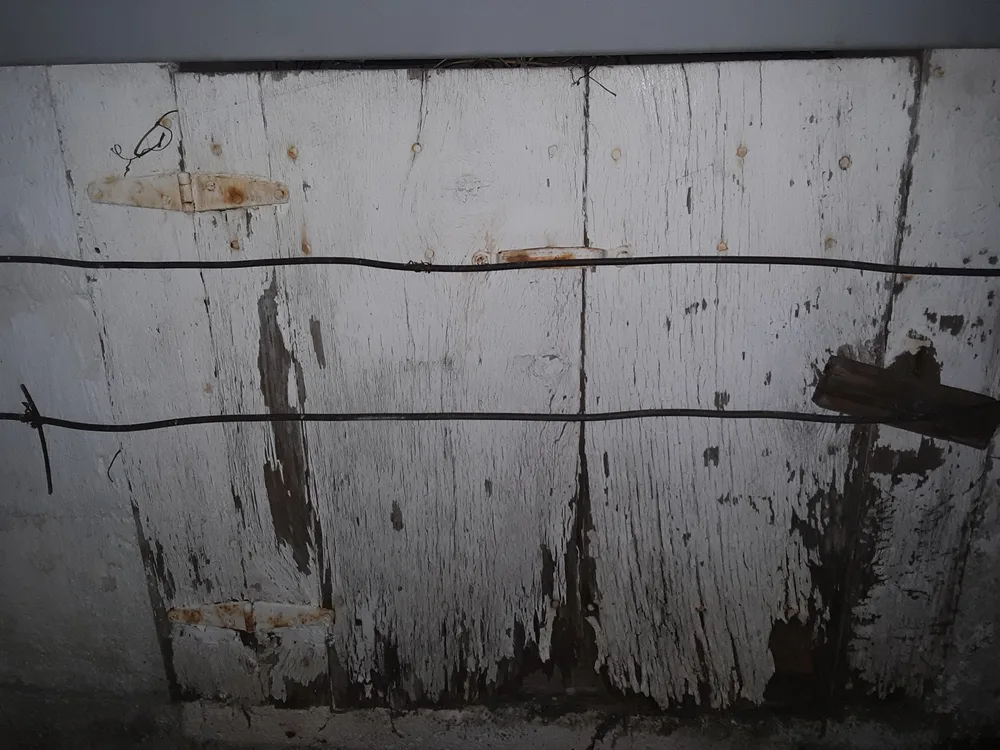
Framing, plumbing and ground cover share a tight space. Note the incomplete ground cover; this is not a finished install. Photo: TradeCrawlspaces, CC BY-SA 4.0; example outside Bend.Start at the door. A broken access panel lets in cold air, snow and mice. Photo: TradeCrawlspaces, CC BY-SA 4.0; example outside Bend.
Which crawl space service do you need?
Water removal & dryingPuddles, a burst pipe or wet framing. Fix the source, remove the water, and document the drying before anything gets covered back up.Restoration company + plumber
Vapor barrier replacementExposed dirt, torn or loose old plastic. A continuous ground barrier with lapped seams limits moisture from the soil. It won’t fix an active leak.Often all a dry Bend crawl space needs
Full encapsulationA sealed liner on the ground and walls, sealed vents and access, wall insulation and humidity control; drainage and a sump only if the site needs it.Ask why each piece is needed
Insulation & air sealingMissing or fallen batts, cold floors, drafts. Fix leaks and pests first. Ask whether they insulate under the floor or at the walls, and why.The most common Bend fix
Mold & contaminated cleanupGrowth, odors, sewage or rodent contamination. Containment, removal and cleaning, plus a plan for the moisture source.A spray alone isn’t a plan
Pest & structural workDroppings, gnawed entry points, soft wood or sagging floors. A liner doesn’t repair framing; supports need a qualified assessment.Separate trades
The distinction that changes your quote: “new ground plastic” and “a sealed system with drainage, insulation and a dehumidifier” are different projects at very different prices. Have every contractor describe the problem, the proposed fix and the maintenance it needs.
What a Bend winter does under your floor
Bend is dry, but it is cold. Single-digit nights, wind and snow sitting against the foundation mean the most common crawl space calls here are about cold, not floods.
🥶 Frozen pipesSupply lines near vents, the access door or an outside wall freeze first, especially on north sides during a cold snap. Insulate them and add thermostatic heat cable where needed.Cold snaps, Dec–Feb
🌬️ Wind through the rim joistThe band of framing where the floor meets the foundation is often the leakiest spot in the house. Sealing it (foam board or spray foam) warms floors fast.Cheap, big payoff
🧊 Vent coversMany Bend homeowners pop foam covers into vents for hard freezes and pull them in spring. Don’t seal vents for good without a design for moisture and any furnace or water heater down there.Seasonal, not permanent
🔥 Ducts in the crawl spaceForced-air ducts under the floor get crushed, disconnected or chewed. Every leak blows heated air into the dirt. Ask an HVAC company to check connections and insulation.Cold rooms, high bills
🚪 The access doorA warped or missing hatch lets in snow, cold air and mice. An insulated, weatherstripped door is a small job worth doing.Check each fall
🏔️ Second homesA Sunriver or Black Butte place sitting empty in January is a frozen-pipe risk. Keep heat on, consider a leak sensor and a freeze alert, and have someone check after cold snaps.Ask about monitoring
Water and drainage: look outside first
Most crawl space water in Bend starts outside the house. Before paying for an interior drainage system, walk the outside after a snowmelt or with the sprinklers running.
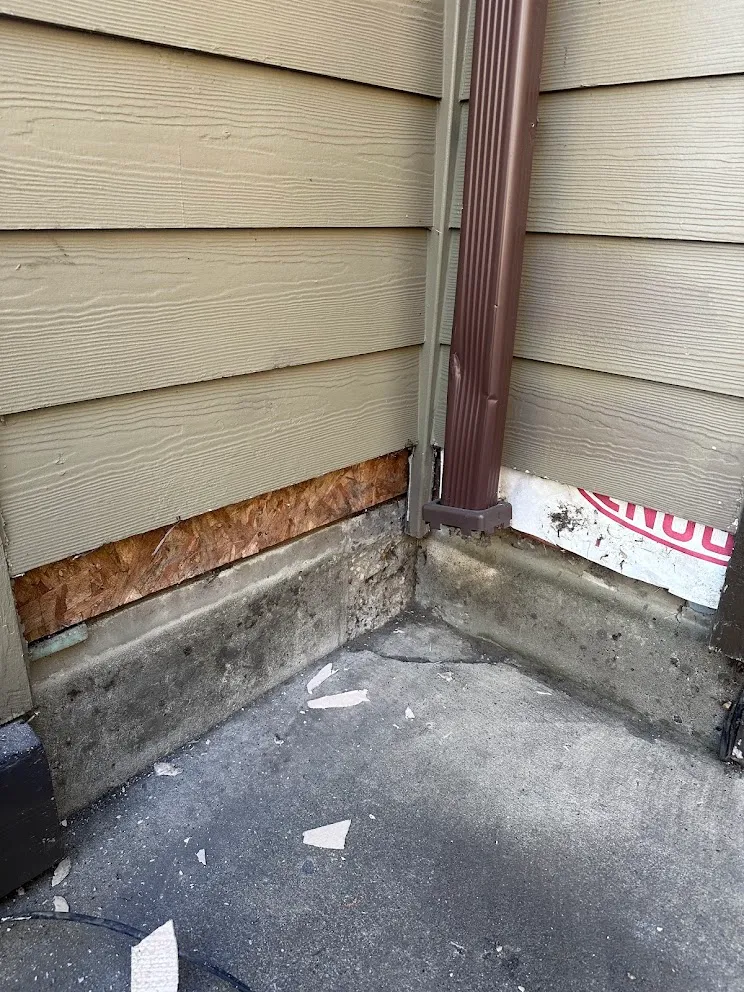
Downspouts: they should discharge several feet from the foundation, not into a flowerbed beside it. Clogged gutters full of pine needles overflow right at the wall.
Grading: soil and bark should slope away from the house. Low spots and crawl access wells that collect runoff are a classic Bend snowmelt problem.
Irrigation: sprinklers spraying the foundation, a leaking valve box or drip line, or beds kept soggy against the house. A wet crawl space in August is usually irrigation or plumbing.
Snow piles: shoveled or plowed snow stacked against the foundation melts straight into the crawl space.
Plumbing: an ongoing leak needs repair even if a sump pump could remove the water.
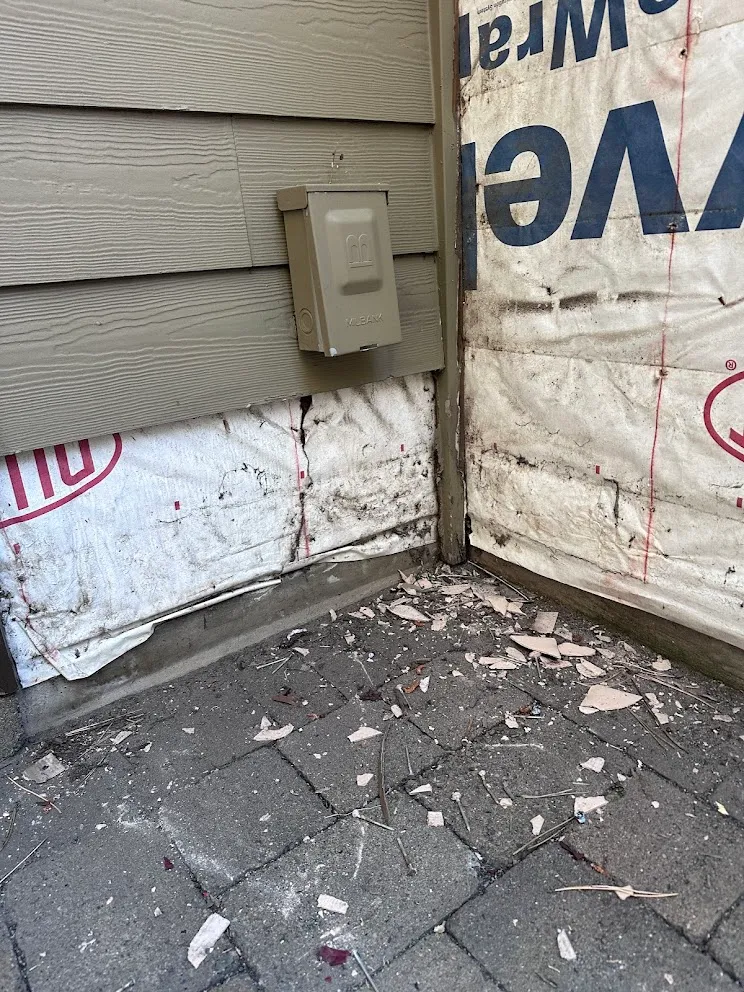
A Bend re-side job: water from a downspout soaked the sheathing at the base of the wall. The same water ends up in the crawl space. Photo: All Things Bend.Damage concentrates where the wall meets the foundation, where snow piles and runoff sit. Photo: All Things Bend.
The U.S. Department of Energy’s crawl space guidance explains why a continuous ground barrier and exterior drainage work together.
Rodents: the Bend crawl space problem nobody mentions
Mice and rats move into crawl spaces when the weather turns cold. They nest in batt insulation, chew ducts and wiring, and leave droppings that shouldn’t be disturbed. Deer mice, common around Central Oregon, can carry hantavirus.
Don’t sweep or vacuum droppings. Ventilate the space, wear gloves and a mask, soak droppings and nests with fresh bleach solution (1½ cups of bleach per gallon of water) or a registered disinfectant, wait five minutes, then wipe up and bag it, following the CDC’s cleanup steps. Heavy contamination is a job for a pro.
Seal the way in. Torn vent screens, gaps around pipes and wires, and a loose access door. Exclusion first, or new insulation just becomes new nesting.
Replace contaminated insulation once the space is sealed and clean.
Check ducts for chewing and droppings inside; contaminated ducts blow air into your rooms.
Radon and crawl space vents
☢️ RadonOregon’s radon program rates Bend ZIP codes low to moderate, but individual homes vary widely and you can’t see or smell it. Test the lowest lived-in floor with a long-term kit, and retest after any crawl space work that changes air flow. See the Oregon Health Authority’s testing page.A liner alone isn’t radon mitigation
🌬️ VentsOregon’s residential code (based on the national IRC) calls for about 1 square foot of vent opening per 150 square feet of crawl space, or 1 per 1,500 with a proper ground vapor retarder. An unvented, conditioned crawl space is allowed when it’s designed that way. Closing vents halfway in between is the worst of both.Vented or unvented: pick one on purpose
Don’t forget the attic
Cold rooms, ice dams and high bills often have causes at both ends of the house. A crawl space problem starts below the floor; an attic problem starts overhead. A whole-home energy assessment looks at both.
Below the floorGround moisture, plumbing leaks, missing floor insulation, damaged ducts, pest entry. Typical work: cleanup, source repairs, vapor barrier, floor insulation, drainage or encapsulation.Crawl space
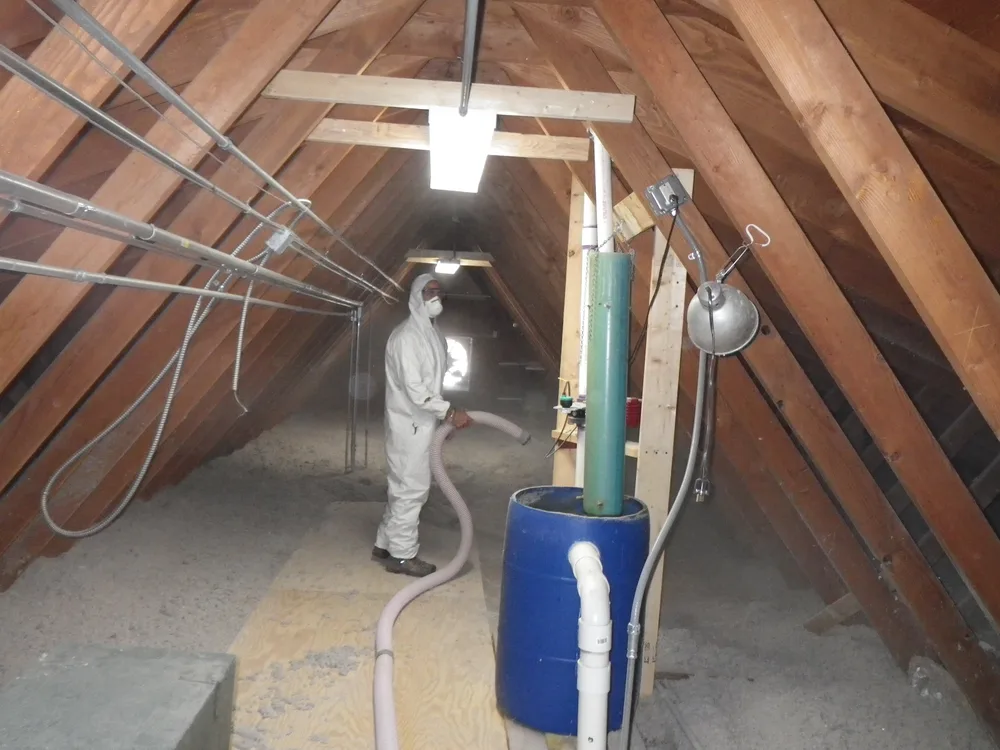
Below the roofRoof leaks, thin or uneven insulation, air leaks at ceiling lights and the hatch, bath fans venting into the attic, blocked soffit vents. Typical work: air sealing, blown insulation, duct and fan corrections.Attic
Blown attic insulation works best after air sealing. Educational example from Garrison Dam National Fish Hatchery, not a Bend project. Photo: Rob Holm / USFWS, public domain.
Uneven snowmelt and icicles on your roof? That is heat escaping into the attic. Ask for air sealing, insulation and ventilation to be evaluated together; the Department of Energy’s ice dam guidance explains why. Also mention knee walls beside upstairs rooms, floors over the garage and ducts in unheated spaces.
A crawl space routine for Bend’s seasons
FallClean gutters, check downspouts, close up vent screens and the access door, insulate exposed pipes. Put vent covers away until a hard freeze.
WinterCovers in during cold snaps. Keep snow piles off the foundation. Watch where meltwater goes during thaws.
SpringPull vent covers. Look in after snowmelt for damp spots, droppings and fallen insulation. Restart irrigation and check for spray on the house.
SummerA wet spot in dry weather means irrigation or plumbing. Best time for insulation and barrier work: the crawl space is dry and dirt isn’t frozen.
DIY or hire it out?
✅ Reasonable to do yourselfLook in from the hatch with a flashlight a couple of times a year. Fix torn vent screens and the access door. Insulate exposed pipes near the hatch. Redirect downspouts and sprinklers. In a dry, clean, roomy crawl space, laying a new ground vapor barrier is a doable weekend job.Low risk, real payoff
🛠️ Hire a proStanding water, sewage, mold on framing, heavy rodent contamination, anything structural, electrical or gas work, crawl spaces under 18 inches tall, and converting to a sealed (unvented) crawl space. Also anything you want documented for a home sale or insurance claim.Safety and paperwork
How to check your crawl space safely
You don’t have to crawl in to learn a lot. Start at the hatch, and only go in if the space is dry, clean and has room to move.
Vapor barrier and insulation: what good looks like
Item
What to ask for
Why
Ground vapor barrier
Covers all exposed soil; seams overlapped and taped; run up the foundation wall and sealed. Code minimum is a Class I vapor retarder (commonly 6-mil polyethylene); 10–20 mil reinforced liners hold up far better where people crawl.
Thin plastic tears the first time a plumber crawls across it.
Encapsulation liner
Reinforced liner (often 12–20 mil) on the ground and walls, mechanically fastened and sealed, with vents and access sealed as designed.
A sealed crawl space must be fully designed, not half-done.
Floor insulation
Batts in full contact with the subfloor, held up with supports every couple of feet; R-value written on the quote.
Sagging batts don’t insulate and become rodent nests.
Rim joist
Air sealed and insulated (rigid foam cut to fit, or spray foam).
Often the leakiest spot in a Bend house in winter.
Ducts
Connections sealed with mastic or foil tape, then insulated; supported off the dirt.
Leaky ducts heat the crawl space instead of your rooms.
Pipes
Insulated, with thermostatic heat cable on runs near vents and outside walls.
The difference between a cold snap and a burst pipe.
Dehumidifiers in Bend: in a dry high-desert climate, a vented crawl space with a good barrier usually doesn’t need one. They make sense in a sealed, encapsulated crawl space or one with a moisture problem that drainage can’t fully solve. Ask about running cost and filter maintenance.
Buying or selling a Bend home with a crawl space
Make sure the inspector actually goes in. Oregon home inspectors are certified through the Construction Contractors Board. Ask whether they enter the crawl space, and read the report for any “not inspected” or “limited access” notes.
Look for photos of the ground cover, insulation, plumbing, ducts and supports, not just a checkbox.
Get each finding quoted separately by a crawl space contractor so you can negotiate on real numbers.
Test for radon during the transaction if it hasn’t been done.
Sellers: fixing a torn barrier, fallen insulation or an access door before listing is usually cheaper than a repair credit later.
Does homeowners insurance cover crawl space water?
Policies differ, but as a rule of thumb: sudden, accidental water (a pipe that bursts in a cold snap) is often covered, while slow leaks, groundwater seepage, maintenance problems and mold from long-term moisture usually aren’t. Flooding from outside generally needs separate flood insurance. Call your agent before cleanup if you can, take photos, and keep receipts for emergency drying.
Mention these when you call
Older homes in Old Bend, River West or the Orchard District: additions often have separate crawl spaces with their own access. Ask whether every section was inspected.
Hillside lots on Awbrey Butte or Overturf: say where water travels on the uphill side and where any drain would discharge.
Manufactured homes: the underfloor wrap (the “belly” or bottom board) is different from plastic on the ground. Fixing one doesn’t fix the other.
Rural property in Tumalo, Alfalfa or Deschutes River Woods: confirm travel charges, and mention wells, pressure tanks or pumps under the house.
HOA homes: check approval rules before changing visible drainage or exterior access doors.
Permits, incentives and local resources
City of Bend Permit CenterInside city limits, ask about permits when the job includes beams or posts, new circuits, plumbing or a change from vented to unvented. 541-388-5580, or the property-owner guide.Give them the written scope
Deschutes CountyOutside city limits, start with the county’s permit guidance. A Bend mailing address doesn’t decide which office handles it.Confirm jurisdiction first
Energy Trust of OregonPacific Power and Cascade Natural Gas customers may qualify for floor and attic insulation incentives paid per square foot. Check current offers and use a participating contractor before work starts. A liner or cleanup alone usually doesn’t qualify.Higher incentives for income-qualified homes
Central Electric & Midstate co-opsElectrically heated homes on Central Electric Cooperative or Midstate Electric (south county) have their own weatherization and insulation incentives, with a review before work begins.Ask before you sign
Keep the paperwork: dated estimates, before-and-after photos, itemized invoices and insulation specs (type, R-value, square feet). Don’t subtract a rebate from your budget until it’s confirmed.
What it costs: make the estimates comparable
There’s no single Bend price for “crawl space repair,” and none of the companies above publish one. The size of the job is what matters:
SmallA barrier patch, a little debris, a pipe insulated, an access door replaced. Ask about minimum charges and disposal.
MediumWater removal, drying, old insulation and barrier out, new ones in. Access and square footage drive it.
LargeA sealed system: liner, wall insulation, drainage, sump and dehumidifier. Compare install cost plus yearly upkeep.
Ask every estimate to list these separately
Line item
What to look for
Area and access
Actual square footage, clearance, and any sections they couldn’t get into
Removal and disposal
Old insulation, plastic, debris, contaminated material
Source repairs
Plumbing, gutters, grading, pest entry points: included or excluded?
Drying and remediation
Method, how they decide it’s dry, readings and photos at the end
New materials
Liner thickness, sealed seams, wall attachment, insulation type and R-value
Filters, servicing, power use, warranty exclusions
Ask whether the visit is a free sales estimate, a paid diagnostic or a written report you can use in a home sale. They aren’t the same thing.
Before you hire: checklist
Tick these off as you call around. Your ticks stay until you close the tab.
What to say when you call
“I’m in [Bend / nearby town] and noticed [water / a smell / fallen insulation / torn plastic / droppings] in the crawl space. It started [when], and I have [photos / an inspection report]. Can you find the cause and quote the needed repairs separately from any optional encapsulation? Is there an inspection fee, and what does the written estimate include?”
Buying or selling? Send the inspection report and ask for a written scope that answers each finding. A contractor’s sales estimate isn’t an independent opinion on a disputed structural or mold issue.
Who to call
Crawl space companies serving Bend
Grouped by the work you need, not ranked. Services come from each company’s own website. Restoration companies dry and clean; waterproofing companies install systems; insulation companies insulate. Call the kind that matches your problem.
Encapsulation + water damageBend office · Central Oregon
Oregon Restoration
Best for:Cleanup now and a longer-term moisture plan later, from one company. Its Bend page lists crawl space encapsulation and mold mitigation.
Vapor barriers
Drainage
Encapsulation
Water damage
Mold
Phone
541-241-4545
Ask
Cleanup, drainage and encapsulation as separate line items
Encapsulation + drainageRegional · serves Deschutes County
John’s Waterproofing
Best for:Comparing a complete crawl space system. Its Deschutes County page shows Bend projects with drainage, vapor barriers and crawl space supports.
Encapsulation
Sump pumps
Dehumidifiers
Structural supports
Phone
503-738-1505
Ask
Bend scheduling, where the sump discharges, maintenance and warranty terms
Floor insulation + air sealingBend team · Central Oregon
GreenSavers
Best for:Cold floors and drafts in a dry crawl space, or looking at the attic and crawl space together in one energy plan. Lists attic, wall and floor insulation and air-leak assessments in Bend.
Best for:When spray foam is on the table for crawl space walls, rim joists or the attic. Its Bend page describes on-site assessments and written scopes.
Closed-cell foam
Rim joists
Crawl space walls
Attics & roof decks
Phone
541-644-4298
Ask
Where foam goes, why, and what moisture prep and covering it needs
Mountain Air Restoration: Bend company listed by the Central Oregon Builders Association for water damage, structural drying and mold remediation. We couldn’t fully check its website; confirm what crawl space work it does. 541-420-0712.
A plumber: For an active leak, a frozen or split pipe, or a water heater dripping into the crawl space. Restoration crews dry things out; plumbers stop the water.
An HVAC company: For crushed, disconnected or torn ductwork under the floor, a common cause of cold rooms and high bills in Bend homes with forced-air heat.
Basement Systems is a national contractor network, so we don’t count it as a separate Bend company. Look up any contractor on the Oregon CCB before you sign.
FAQ
Common questions
Is the crawl space under the house or in the attic?
Under the house. A crawl space is the low space between the ground and the first floor, with floor joists, plumbing, wiring, ducts and insulation. The attic is above the top ceiling. Both can need insulation and moisture work, but they are different jobs.
Does every Bend home need crawl space encapsulation?
No. Bend’s dry climate means many crawl spaces only need a good ground vapor barrier, fixed drainage outside and proper floor insulation. Encapsulation makes sense when moisture keeps coming back, or when you are deliberately converting to an unvented, conditioned crawl space. Ask what problem it solves in your house.
Should I close my crawl space vents in winter in Bend?
Many Bend homeowners put foam vent covers on during deep cold snaps to protect pipes, then remove them in spring. Oregon’s code is built around vented crawl spaces unless the space is designed as unvented, so don’t seal vents permanently without a plan for moisture and any gas appliances down there. Insulating and heat-taping exposed pipes is the better long-term fix.
How do I keep crawl space pipes from freezing in Bend?
Insulate exposed pipes, use thermostatically controlled heat cable on vulnerable runs, seal gaps in the rim joist and around the access door, keep vents covered only during hard freezes, and keep the house heated when you travel. If a pipe freezes, shut off the main and call a plumber; don’t use an open flame to thaw it.
Who should I call first for water in my crawl space?
For an active plumbing leak, a plumber plus a water-damage restoration company. For water that shows up after snowmelt, rain or irrigation, have the source evaluated (gutters, grading, sprinklers) before buying a drainage system.
Will new plastic get rid of mold?
No. A vapor barrier limits moisture from the soil but doesn’t remove existing growth or fix a leak. The EPA’s guidance is to clean up mold and fix the water problem. Ask for a remediation and drying plan before anything gets covered.
Is radon a problem in Bend crawl spaces?
Oregon’s radon program rates Bend ZIP codes low to moderate, but any home can have high radon and you can’t see or smell it. Test the living space with a long-term kit (about $15–$30 at hardware stores, or free through the state in ZIPs with few results), and retest after crawl space work that changes air flow.
How much do crawl space services cost in Bend?
None of the companies we checked publish a price list; they assess first. A barrier patch, a full cleanup with new insulation, and a sealed system with a sump and dehumidifier are completely different jobs. Get two or three written quotes that list each item separately.
Can one Bend company look at both the attic and crawl space?
Insulation and home-performance companies often assess both; GreenSavers and Premier Spray Foam list attic and crawl space work in Bend. Restoration companies usually cover only the area with damage. Say what you want when you book.
How often should I check my crawl space in Bend?
Look in from the hatch at least twice a year: in the fall before freezing weather and in spring after snowmelt. Also check after any cold snap, a big thaw, or when you notice a new smell or a jump in your heating bill.
What thickness vapor barrier should I use?
Oregon’s code minimum is a Class I vapor retarder, commonly 6-mil polyethylene, covering all exposed soil with overlapped seams. For durability, especially where people will crawl to reach plumbing or a furnace, a 10- to 20-mil reinforced liner lasts much longer. Encapsulation systems typically use 12- to 20-mil liners.
Can I install a crawl space vapor barrier myself?
If the space is dry, clean, free of droppings and tall enough to move around in, yes. Remove debris, lay the barrier over all soil, overlap seams and tape them, and run it up the foundation walls. If there’s water, mold, contamination or tight clearance, hire it out.
Do I need a crawl space dehumidifier in Bend?
Usually not in a vented crawl space with a good ground barrier, because Central Oregon’s air is dry. A dehumidifier makes sense in a sealed, encapsulated crawl space or when moisture persists after drainage fixes.
Does homeowners insurance cover a flooded crawl space?
Sudden, accidental water such as a burst pipe is often covered; gradual leaks, groundwater seepage and long-term mold usually are not, and outside flooding needs flood insurance. Check your policy and call your agent early.