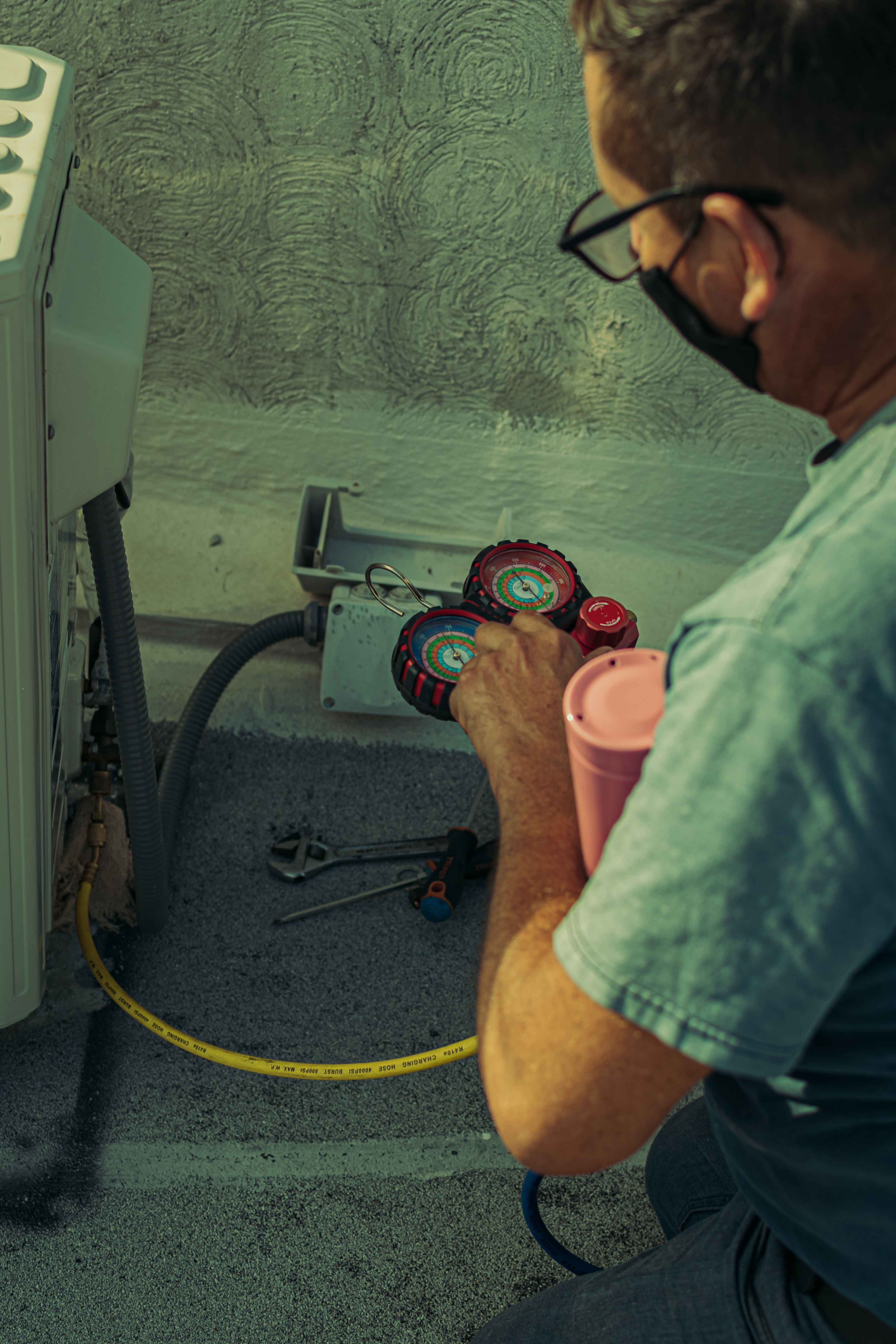
AC cleaning and outdoor HVAC maintenance
Ask exactly which equipment a cleaning visit covers. An outdoor condenser or heat-pump unit, an indoor evaporator coil, a blower and the duct system are different components. A package labeled “AC cleaning” may cover only one of them.
- Outdoor unit: request appropriate coil cleaning and debris removal, with a check of accessible condition and manufacturer-specified clearance.
- Indoor components: confirm whether accessible coil, blower and condensate drain work are included or separately priced.
- Filters: specify the correct filter type and size, whether replacements are supplied, and the schedule recommended for your equipment.
- Operational service: ask whether the visit includes performance checks or cleaning only. Refrigerant diagnosis, electrical faults and failed parts require qualified HVAC service.
In Bend, dust, vegetation and seasonal debris can collect around outdoor units. Keep the manufacturer’s airflow clearance open and ask about a check before the cooling season. A heat pump also works through winter; do not treat its outdoor unit like an AC-only unit that can simply be covered for the season.
Avoid pressure washing delicate coils or spraying electrical components. Use the equipment’s procedure and an appropriate technician; Trane’s condenser coil guidance explains clearance and gentle cleaning considerations.
Before booking, send photos of the indoor and outdoor equipment labels. Get a scope that names each unit, cleaning method, drain work, included filters and repair exclusions. If cooling is weak, the system freezes up or an error repeats, request diagnosis rather than assuming dirty coils are the sole cause.
For bundled visits, compare home maintenance providers. Dryer exhaust is separate: see dryer vent cleaning.
Bend is a tougher HVAC market than a generic heating-and-cooling guide makes it sound. A system here has to deal with freezing winter nights, hot dry afternoons, large day-to-night temperature swings and wildfire-smoke periods when filtration matters almost as much as temperature.
This guide is designed to help Bend homeowners answer three questions:
- Who should I call?
- What type of system actually makes sense for my house?
- What should I ask before approving a repair or replacement?
If you already know the problem, jump to our focused guides for furnace repair in Bend, AC repair in Bend, heat pumps in Bend or ductless mini-splits in Bend.
What makes HVAC in Bend different?
A national “best HVAC system” list is not very useful here unless it accounts for Central Oregon conditions and the actual house.
Cold nights matter more than the average winter temperature
For a heat pump, ask for the proposed model’s heating capacity at cold outdoor temperatures, not just its SEER2 or HSPF2 rating.
Two heat pumps with similar efficiency labels can behave very differently when the temperature drops well below freezing.
A useful proposal should tell you:
- the outdoor design temperature used for the load calculation;
- how much heating capacity the equipment still produces at 17°F and lower;
- whether backup heat is electric resistance or a gas furnace;
- when backup heat is expected to turn on;
- whether the electrical panel and circuit can support the equipment.
If a quote only says something like “3-ton heat pump,” ask for the exact indoor and outdoor model numbers.
You can also compare this with our Bend weather guide, especially if you are new to Central Oregon and deciding how much winter performance matters.
Summer cooling is not an afterthought
Bend’s dry climate and cooler nights help, but long hot stretches can still make west-facing rooms, upstairs bedrooms and poorly insulated additions uncomfortable.
If one part of the house is consistently much hotter than another, do not assume the answer is simply a larger AC unit. Ask the contractor to check:
- supply airflow;
- return-air pathways;
- duct leakage;
- attic or wall insulation;
- window exposure and solar gain;
- whether the existing system is short-cycling.
For troubleshooting rather than replacement, see AC repair in Bend.
Wildfire smoke changes the HVAC conversation
During smoke events, cooling and filtration overlap.
The Oregon Health Authority recommends a MERV-13 or better filter for central-air systems and recirculating indoor air during wildfire smoke. The Oregon Department of Environmental Quality similarly recommends high-efficiency filtration and setting heating or cooling systems to recycle or recirculate air during smoke advisories.
The important question is whether your system can handle the filter without hurting airflow.
Ask an HVAC contractor to check:
- current filter size and pressure drop;
- whether a deeper media cabinet would reduce restriction;
- whether the blower can safely circulate air for filtration without heating or cooling;
- whether the system brings in outdoor air and how that intake is controlled;
- whether portable HEPA filtration makes more sense for bedrooms or a clean-air room.
What HVAC setup makes sense for a Bend home?
There is no single best system. Start with the house you already have.
| Your situation | Systems worth comparing | What matters most |
|---|
| Existing gas furnace + ducts | Furnace/AC, heat pump + furnace, all-electric heat pump | Duct condition, electrical capacity, cold-weather heat-pump output |
| Existing electric furnace | Cold-climate ducted heat pump | Backup heat, panel capacity, incentives, low-temperature output |
| No useful ductwork | Ductless mini-split or compact ducted system | Indoor-head placement, room coverage, condensate routing |
| Addition, ADU or bonus room | Single-zone or multi-zone mini-split | Whether one head can serve closed rooms |
| Uneven temperatures | Airflow and duct evaluation first | Returns, leakage, static pressure, balancing |
| Smoke-sensitive household | HVAC filtration + portable HEPA | Filter capability, recirculation, air sealing |
The expensive mistake is choosing equipment before diagnosing the house.
Heat pumps in Bend
Modern cold-climate heat pumps can be a very good fit in Central Oregon, but “heat pump” is a category, not a performance specification.
Before signing a proposal, ask the contractor to show you the exact equipment selection and how it performs as outdoor temperature falls.
Ducted heat pump
Usually the cleanest option when the home already has usable central ductwork. The installer still needs to confirm the ducts can move enough air without excessive static pressure.
Dual-fuel heat pump
This pairs an electric heat pump with a gas furnace. It can make sense when a Bend home already has natural gas and good furnace infrastructure but the homeowner wants electric heating for much of the year.
Ask what outdoor temperature the contractor plans to use for the switchover between heat pump and furnace.
Ductless mini-split
Often useful for:
- ADUs;
- converted garages;
- additions;
- bonus rooms;
- home offices;
- older houses without practical ductwork.
See our full ductless mini-split guide before deciding how many indoor heads you actually need.
Square-foot rules of thumb are fine for a rough conversation, but not for final equipment sizing.
Windows, insulation, air leakage, ceiling height, orientation, duct losses and internal loads all matter. Ask whether the contractor is performing a recognized heating-and-cooling load calculation instead of simply matching the tonnage of the old equipment.
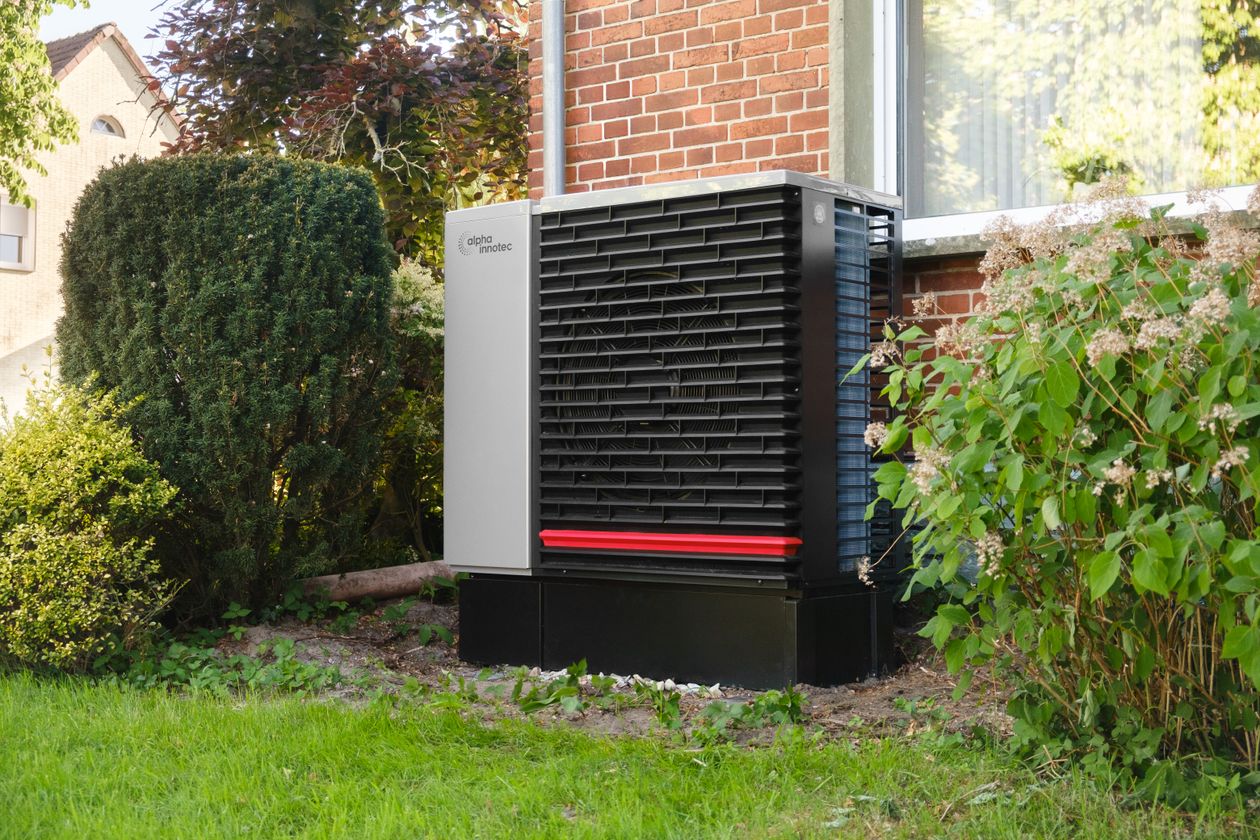
For Bend installations, cold-weather capacity and proper sizing matter more than the fact that the equipment is simply labeled a heat pump.
Furnace + central AC in Bend
A gas furnace paired with central AC can still be a sensible setup, especially when the home already has:
- natural gas;
- good ductwork;
- adequate return air;
- a furnace venting setup in good condition.
If the furnace is older but still working, ask for more than one option.
A useful comparison might include:
- repairing the existing furnace;
- replacing only the furnace;
- replacing furnace + AC together;
- installing a heat pump while keeping a furnace for backup;
- converting to an all-electric heat pump where practical.
That gives you a real decision instead of just hearing “your furnace is old.”
For a no-heat issue, use our furnace repair guide.
Repair or replace?
Age matters, but it should not be the only reason to replace HVAC equipment.
Replacement becomes easier to justify when several of these apply:
- compressor, heat exchanger or another major component has failed;
- the system has needed repeated expensive repairs;
- refrigerant or parts are difficult or costly to source;
- comfort is poor even when the equipment is operating;
- airflow or duct problems are being corrected at the same time;
- a remodel changed the home’s heating or cooling load;
- you want to add cooling or change fuel type;
- current incentives materially change the project economics.
For a borderline system, ask the technician to put both the repair price and replacement options in writing.
Check the ductwork before buying premium equipment
A high-end furnace or heat pump cannot overcome a bad distribution system.
Ask the contractor to evaluate:
- supply and return duct sizing;
- disconnected, crushed or leaking ducts;
- return-air paths from closed bedrooms;
- rooms that are consistently hot or cold;
- filter pressure drop;
- total external static pressure;
- whether duct modifications are included in the proposal.
If a company recommends a much larger system because “the current one cannot keep up,” ask whether airflow and heat loss were actually checked first.
Wildfire smoke and indoor air quality
For Bend homeowners, this deserves its own part of the HVAC plan.
During active smoke, Oregon DEQ advises residents to use high-efficiency filtration and recirculate indoor air where possible. The Oregon Health Authority also recommends keeping windows and doors closed during smoke when conditions allow, keeping filters clean and using HEPA filtration.
A practical Bend setup can include:
- an HVAC filter the system can actually support;
- a deeper media filter cabinet where appropriate;
- portable HEPA filtration in bedrooms or a main living space;
- good weatherstripping and air sealing;
- knowing how to switch fresh-air controls to recirculation during smoke.
For the building-envelope side of the equation, see our Bend insulation guide and preparing your home for winter in Bend.
Permits, licenses and rebates in Bend
Ask who is pulling the permit
The City of Bend Permit Center handles local permit applications and can confirm what is required for a specific HVAC project.
For replacement or new equipment, ask the contractor:
- Does this job require a mechanical permit?
- Is the permit included in the price?
- Who is responsible for scheduling and closing out the inspection?
- Does the work also require electrical changes or a separate electrical permit?
The City also requires contractors performing permitted work to be registered in its system and provide their state contractor-board license information.
Verify the contractor’s Oregon license
For a major HVAC project, verify the company through the Oregon Construction Contractors Board rather than relying only on reviews.
You are checking that the license is active and that the company information matches the business giving you the proposal.
Check current incentives before signing
HVAC incentives change. Energy Trust of Oregon made multiple residential incentive changes for 2026, including changes to extended-capacity heat-pump offers.
Use the current Energy Trust residential incentive application and eligibility tool rather than relying on an old rebate article.
Ask the HVAC contractor to show:
- the gross project price before incentives;
- the exact incentive being assumed;
- who submits the paperwork;
- what equipment qualification is required;
- what happens to your price if the incentive changes or you do not qualify.
That prevents a quote from looking cheaper simply because a rebate is being treated as guaranteed.
HVAC maintenance in Bend: when to schedule it
A practical approach is to test equipment before the first real hot or cold stretch, not on the first day everyone else discovers a problem.
In spring
- turn on cooling before a heat wave;
- check that outdoor equipment is clear of debris;
- replace or inspect the filter;
- make sure condensate drains correctly;
- note rooms that are already struggling.
In fall
- test the furnace or heat pump before freezing weather;
- replace or inspect filters;
- make sure exterior heat-pump equipment has clear airflow;
- confirm thermostats and backup heat operate correctly;
- address unusual noises or short cycling before peak season.
Heat pumps run in both heating and cooling seasons, so ask the installer whether your equipment and warranty call for one or two professional maintenance visits each year.
How to compare HVAC quotes
Do not compare only the bottom-line price.
Put each proposal into the same checklist:
- exact indoor and outdoor model numbers;
- system capacity;
- SEER2, EER2 and HSPF2 where applicable;
- load-calculation assumptions;
- cold-weather capacity for heat pumps;
- backup-heat strategy;
- ductwork changes;
- thermostat and controls;
- electrical scope;
- permits;
- condensate drainage;
- equipment removal;
- startup and commissioning;
- labor warranty;
- manufacturer warranty;
- maintenance requirements;
- incentives;
- exclusions.
A cheaper quote is not actually cheaper if it leaves out electrical work, duct changes, permits or controls that another contractor included.
Questions worth asking every Bend HVAC contractor
Keep this list open when you get bids:
- What did you find that makes you recommend repair versus replacement?
- Are you doing a load calculation for replacement equipment?
- What exact model numbers are you proposing?
- For a heat pump, what is the heating capacity at cold outdoor temperatures?
- Will my existing ducts handle the required airflow?
- Did you measure or estimate static pressure?
- Does my electrical panel need changes?
- What permits are required and who handles them?
- What labor warranty do you provide?
- What manufacturer warranty applies?
- Are rebates included in the quoted price?
- What is specifically not included?
- Who handles warranty service if something fails next winter?
Planning a larger home project? These are useful next: