Who plows driveways, sidewalks, lots and HOA roads around Bend, what they offer, and the City of Bend rules that decide what you have to clear and how fast.
24 hrsto clear a home’s sidewalk after snowfall (City of Bend)
6 hrsof daylight for commercial sidewalks
2 inof snow, still falling, before City plows usually roll
~33 inof snow in an average Bend winter, most of it Dec–Feb (WRCC)
Bend snow removal is less about the yearly total and more about timing, access and refreezing. A few inches can turn into a hard-packed driveway or a slick sidewalk overnight, and the City plow can bury your driveway apron right after you’ve cleared it. The fix is to line up help before the first storm.
What are you clearing?
Pick one to filter the companies below.
My driveway & sidewalk: Most homeowners want a seasonal plan or an on-call list. Ask about the trigger depth, whether the sidewalk is included (the City gives you 24 hours) and who clears the plow berm.
Business or parking lot: Commercial sidewalks have six daylight hours. Look for ice management through the storm, not just one plow pass, and service logs if you ever need to show a lot was treated.
HOA or private road: The City doesn’t plow private streets or alleys. Get a written route, a snow-stacking plan and a response time for the whole community.
Rental or second home: Someone has to clear the sidewalk within 24 hours even when nobody is there. Automatic seasonal service is the safe choice; spell out who pays in the lease.
Sunriver: Sunriver is outside the City of Bend. These crews list Sunriver in their service areas.
Roof snow & ice dams: Few plow crews do roofs. Read the roof section first, then call a roofer or a crew that lists roof clearing, and ask for insurance.
Snow-removal companies and resources serving Bend in 2026
Each listing was checked on the company’s own site or listing on Oct 23, 2026. None of them post prices, so plan on quotes. 9 companies shown
Landscape company · homes and businesses
Newport Avenue Landscaping
The clearest published terms in Bend: a November–March seasonal contract with unlimited visits above a 2-inch trigger, or on-call visits.
Seasonal contract
Yes: roughly Nov–Mar, unlimited service once snow reaches 2 in.
Per push / on call
Yes: on-call, first come, first served
Service area
Bend, Redmond, Sisters, Sunriver, La Pine; also lists Tumalo, Terrebonne, Madras, Prineville, Crooked River Ranch
Driveway and parking-lot plowing
Sidewalks and walkways
Deicer on walks
Sand for traction
Contract customers get priority in big storms. Custom quotes after a free on-site assessment; no prices posted.
Source: City of Bend Resource Directory, checked Oct 23, 2026. The City’s older brochure asks that, if you hire a neighbor or someone from an ad instead, you pay only after the work is done.
In the Western Regional Climate Center’s long-term record for Bend, the average winter brings about 33 inches, and January is the snowiest month. The City’s own winter brochure uses 34 inches.
The average hides huge swings. Complete winters in the record run from under 5 inches to 90.6 inches (1973–74). That’s why a per-push plan can be a bargain one winter and a seasonal contract a lifesaver the next.
The City’s brochure also notes that its chemical de-icer becomes less effective below 20°F, one more reason not to count on melt alone on a cold night.
Average snowfall by month, Bend
0.3″Oct
3.4″Nov
8.3″Dec
10.5″Jan
5.5″Feb
3.4″Mar
1.3″Apr
0.3″May
Mean monthly snowfall in inches, Bend station 350694, period of record. Source: WRCC.
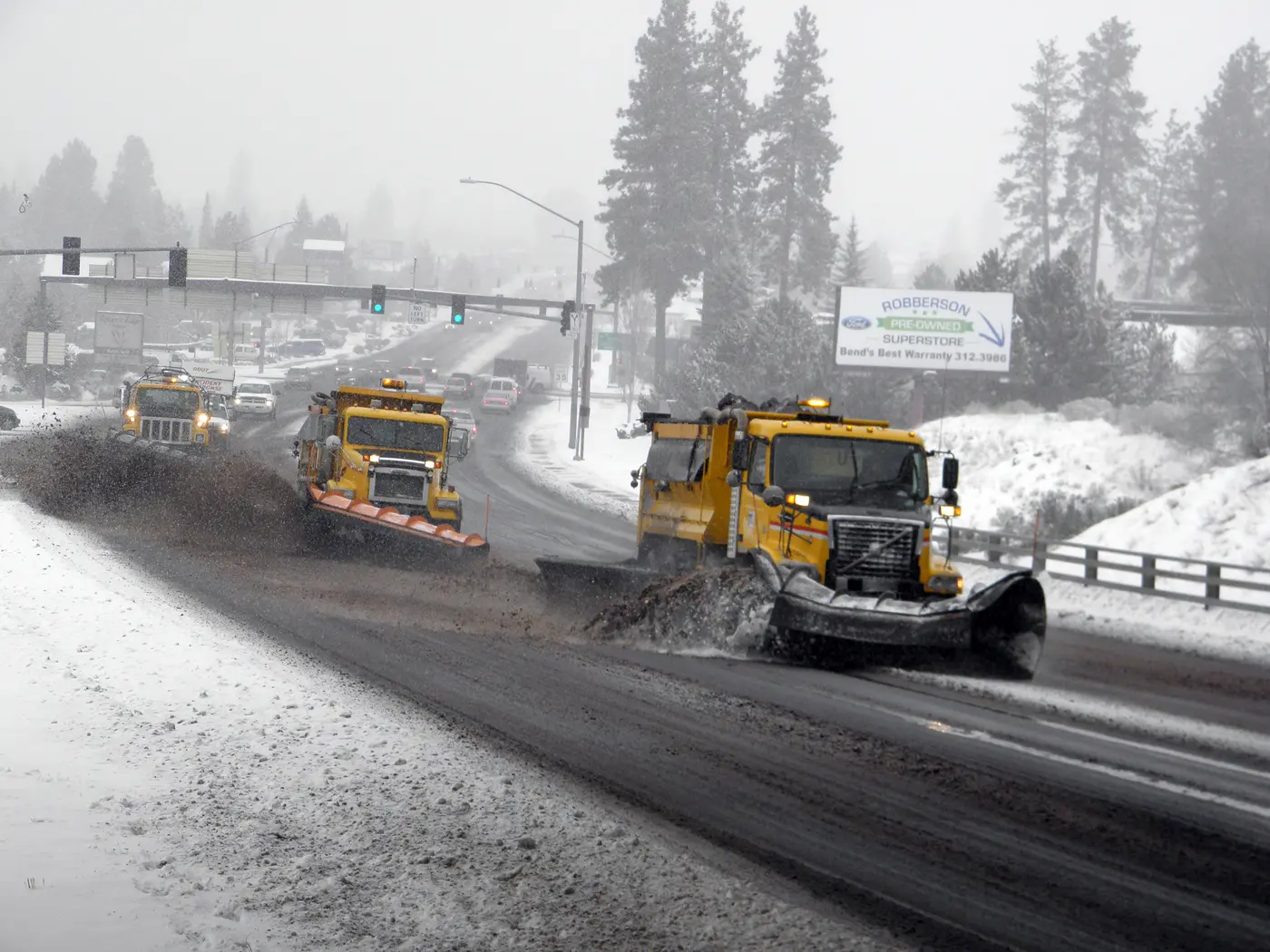
The City of Bend maintains more than 932 miles of public streets. Plowing usually starts when snow reaches 2 inches and is still accumulating, and crews work in this order:
Priority One: major collectors and arterials. The emergency-services network and the busiest roads.
Priority Two: selected collectors. Streets that feed Priority One, routes to medical facilities, schools and major employers, and steep hills and curves.
Priority Three: residential and other streets. Only after Priorities One and Two are done. In a big storm the City may call in contractors to help clear residential streets.
What the City doesn’t plow
Private property, business complexes, apartment complexes, private streets and alleys. Those belong to the owner, the HOA or the property manager.
Snow emergencies and parking
When the City declares a snow emergency, cars must be moved off marked snow-zone streets so crews can plow curb to curb. The City announces it with a news release and a 12-hour parking restriction; downtown is usually plowed at night. Marked streets include Wall, Bond, Chandler, NE Courtney, NE Conners, NW Broadway, NW Tumalo, and 17th Street and Troon. If your car goes missing during one, call Consolidated Towing at 541-389-8080.
Keep basketball hoops, campers, garbage cans and parked cars out of the street when snow is coming, keep irrigation heads back from the curb, and don’t landscape the right-of-way with rocks, bricks or timbers: plows will hit them. You can watch where plows have been on the City’s Winter Operations map (30-minute delay). Mailbox, curb or sidewalk damage from a plow goes to Transportation & Mobility at 541-317-3000 ext. 3.
24 hoursHomes: clear snow and ice from the sidewalk within 24 hours after snowfall.
6 daylight hoursCommercial properties: clear sidewalks within six daylight hours after snowfall.
Keep it on your lotDon’t shovel or plow snow from the sidewalk or driveway into the street.
Plow-back is still yoursIf a City plow pushes snow back onto your sidewalk, you still have to clear it.
HydrantsClear snow around a fire hydrant in front of your property.
IceThe City’s brochure quotes the ordinance: ice can stay only if it’s covered with material that makes it safe to walk on, like sand.
The City’s brochure says breaking the sidewalk rule is a civil infraction, and the City’s winter operations page calls pushing snow into the street a Class B civil infraction. To report a sidewalk that isn’t cleared, file a snow-removal complaint through the City’s Online Permit Center or call Code Enforcement at 541-312-4908.
If you know an older or less mobile neighbor who can’t shovel, the City says many neighborhood associations take part in a Good Samaritan program that pairs them with a volunteer for the winter. Your neighborhood association is the place to start.
Per-visit service vs. seasonal contract
Per-visit or on-call
Best when you can handle most storms yourself and want help with the big ones.
On-call customers are usually served after contract customers. Newport Avenue says on-call is first come, first served.
Ask about storm minimums, and whether sanding or ice melt costs extra.
Ask whether a return trip after the City plow passes counts as a new visit.
Seasonal contract
Best if you travel, work early, own a rental or run a business with a sidewalk deadline.
Usually covers about November through March. Newport Avenue’s covers unlimited visits once snow reaches 2 inches.
Contract customers get priority in storms (Newport Avenue, Hummingbird).
Get the trigger depth, sidewalks, berm cleanup, ice control, snow-stacking areas, repeat passes in long storms and cancellation terms in writing.
Contract or per-push? Plug in your quotes
Use the prices the companies quote you. Nothing is sent anywhere.
Enter a season price and a per-push price to see the break-even point.
Snowplow, snowblower or shovel?
Plow: fast on long driveways and lots, but it pushes snow into piles. You need room to stack it without blocking sight lines, sidewalks, hydrants or mailboxes.
Snowblower: better for tight driveways and sidewalks, because snow can be thrown where you want it instead of banked.
Shovel: still needed for steps, decks, narrow walks and entries. A good residential crew uses all three.
What drives the price
No Bend company we checked posts prices; every one quotes per property, and Newport Avenue does a free on-site assessment first. What the companies say moves the quote:
Size and time on site. Newport Avenue says cost depends on how long the snow takes to clear.
Home vs. business. Hummingbird says residential and commercial pricing differ.
How much snow falls. Hummingbird also ties cost to the volume of snow.
Plan type. Seasonal, per-push, monthly, on-arrival and emergency calls are priced differently; Sunriver Snow Service’s monthly plan, for example, includes 15% off extra clearings.
Extras. Ice melt, sanding, hauling snow away, steps and decks, and roof clearing are usually separate line items. Ask.
When to book
September–OctoberGet quotes and sign a seasonal contract. Mark driveway edges, blow out irrigation, clean gutters.
NovemberNovember averages about 3.4 inches of snow in Bend, often the first plowable storms of the season.
December–FebruaryThe bulk of the season: January averages the most snow.
March–AprilLate storms still happen. Check your contract’s end date before you cancel.
City plows are angled to the right, so they can leave a dense berm across a driveway you just cleared. The City’s advice:
Before the plow comes, clear a wide area in front of and to the right of your driveway (as you face the street) so the plow has somewhere to put the snow.
Pile your snow on the downstream side of the driveway and behind the sidewalk.
If you can, wait to clear the driveway until the plow has passed. Plows may make several passes.
If you have a service, ask whether post-plow berm cleanup is included or counts as another visit.
Plan where the snow will go
Before the first storm, agree with your crew on where snow can be stacked, and mark what it must avoid: storm drains, hydrants, mailboxes, garage doors, trash pickup spots, irrigation heads near the curb, and paver or hardscape edges.
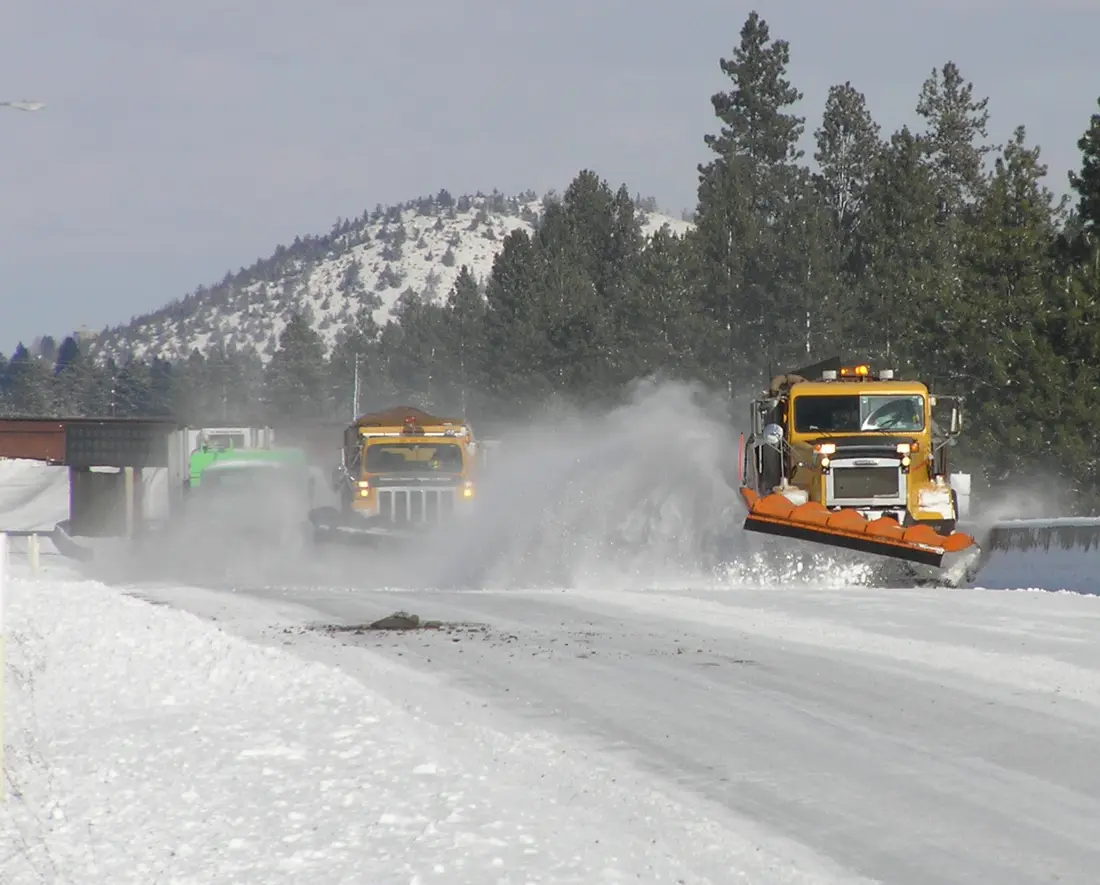
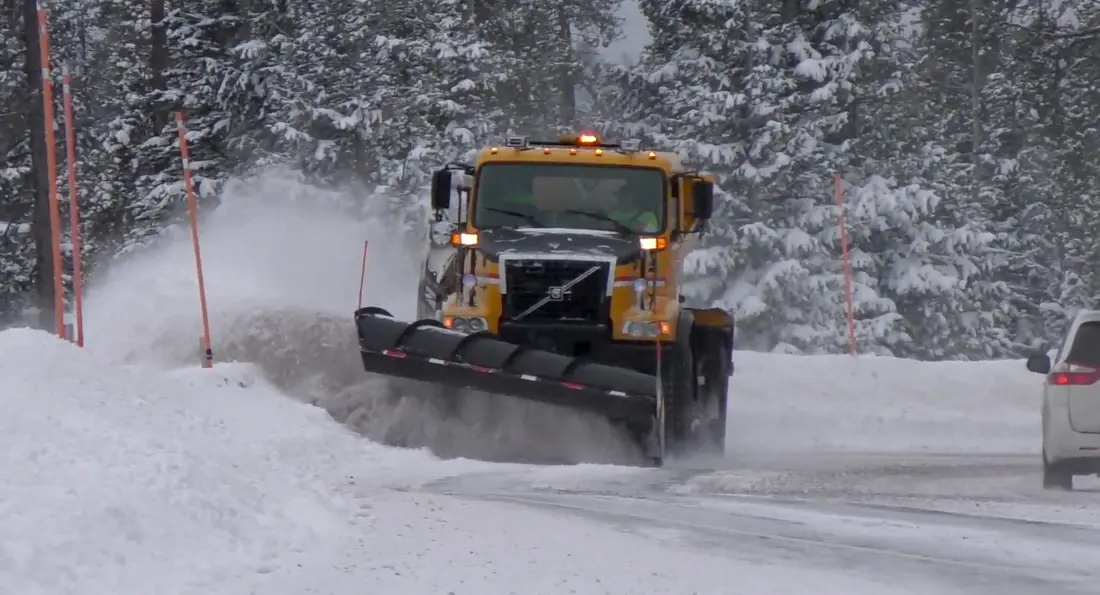
Orange marker poles show the plow where the edge is. Reflective stakes do the same job on a driveway. Snow removal near Mt. Bachelor, Feb. 2019. Photo: Oregon Department of Transportation, CC BY 2.0
Roof snow and ice dams
Ice dams were “rarely seen in Bend” until the winter of 2016–17, The Bulletin reported, when they caused leaks and water damage across town. They form when heat escaping into the attic melts roof snow that refreezes at the colder eaves. University of Minnesota Extension says air leaking from the house into the attic is the main heat source in many homes, so the lasting fix is air-sealing the ceiling, then adding insulation, not just clearing snow.
When to clear the roof
In a Jan. 2024 Bulletin story, NW Quality Roofing in Bend recommended removing roof snow once it reaches 1 foot or more, and warned that heat cables aren’t foolproof.
FEMA says roof snow removal should be left to qualified people with fall protection, without mechanical equipment, leaving a couple of inches on the roof.
A roof rake from the ground can pull snow off the eaves, but Minnesota Extension notes it can damage roofing and is only a short-term fix.
Signs to get out and call a pro
FEMA lists sagging ceilings or roof members, popping or cracking sounds, doors or windows that suddenly stick, new cracks in walls, and leaks. If you see them, leave the building and call a building official or engineer.
Who to call: start with our roofing companies guide, or a crew above that lists roof clearing (On The Move). The Bulletin reported that low-pressure steam is one of the few ways to remove roof ice without damaging the roof; a Bend roofer said hammers and hot pressure washers can. Ice Dam Guys, a Minneapolis company, advertises same-day steam ice-dam removal in Bend. Oregon doesn’t regulate these fees, so get the rate in writing first: in 2017 Bend-area homeowners were quoted hourly rates in the hundreds of dollars.
De-icing and traction
The City pre-treats roads with magnesium chloride when ice is forecast, uses sand at intersections and on hills, and uses salt only rarely. At home, pick a product for the surface, the pets and the plants around it.
🧱 Concrete
No deicer on concrete less than a year old (Portland Cement Association). Use sand.
Never use products with ammonium nitrate or ammonium sulfate.
PCA research found magnesium chloride, potassium chloride, CMA and urea caused higher deterioration rates than sodium or calcium chloride. Ask your concrete contractor what’s safe for your slab or pavers.
🐕 Pets
Common ice melts are all salts: sodium, potassium, calcium or magnesium chloride (ASPCA).
Pets usually get it by licking their paws or eating treated snow; too much can cause vomiting and, in larger amounts, high sodium levels.
Wipe paws after walks and look for products labeled pet-friendly.
🌲 Plants
Salt damage often doesn’t show until spring (Iowa State Extension).
Stretch salt with sand: about 50 pounds of sand to 1 pound of salt.
Calcium chloride and CMA are less harmful to plants than rock salt. Soak the root zone in early spring to flush salt out.
Ask your service what it spreads and where. Sand or cinders add traction without melting anything, but leave cleanup for spring.
HOAs, rentals and second homes
HOAs and private roads
The City doesn’t plow private streets, alleys, apartment complexes or business complexes. HOAs need their own contract: Fagen Tree & Chips lists HOA community plowing, and On The Move lists HOAs and complexes. Put the route, trigger depth, response time, stacking areas and who clears the sidewalks along City streets in the contract.
Rentals and vacation homes
The sidewalk rule applies to the “owner or person in charge” of the property, so the lease or management agreement should say who shovels and who pays. Automatic seasonal service covers empty homes; Sunriver Snow Service sells an on-arrival clearing for guests. See our property management guide.
Questions to ask a Bend snow-removal company
Do you serve my exact address or neighborhood?
What snowfall depth triggers a visit, and is it automatic or do I call?
Is the public sidewalk included, and will you meet the City’s 24-hour (or six-hour commercial) deadline?
Do you come back for the berm the City plow leaves?
Where will you stack the snow?
What do you use for ice: which product, on which surfaces, and is it extra?
Will you make repeat passes in a long storm?
How do contract customers rank against on-call customers in a big storm?
What happens if cars are parked in the way?
How are unusually big storms billed, and is there a cap?
Can I see proof of liability insurance? Who pays if you damage pavers, irrigation or the lawn?
When does the contract start and end, and how do I cancel?
Prepare the property before winter
Mark driveway edges and obstacles with reflective stakes.
Move decorations and rocks out of the plow’s path and off the right-of-way.
Fix potholes and broken edges before snow hides them (asphalt, concrete).
Agree on where snow can be piled.
Blow out irrigation and protect exposed backflow equipment.
Trim weak branches over the driveway and roof (tree services).
Keep a shovel, scraper and traction sand on hand even if you hire a service.
Snow-removal FAQ
Can I push snow from my driveway into the street?
No. The City of Bend says snow from private property can’t be pushed into or across the street, and calls it a Class B civil infraction. Pile it on your own property, on the downstream side of the driveway and behind the sidewalk.
How long do I have to clear my sidewalk in Bend?
Homes have 24 hours after snowfall. Commercial properties have six daylight hours. You’re also responsible for the snow around a fire hydrant in front of your property, and for snow a City plow pushes back onto the sidewalk.
Will the City plow my driveway or clear the berm at the end of it?
No. City plows are angled to push snow to the right, which can leave a berm across driveways, and residents have to clear it. The City says it can’t avoid this with more than 45,000 driveways in town. Waiting until the plow has passed saves doing it twice.
When will the City plow my residential street?
Plowing usually starts once snow reaches 2 inches and is still falling. Crews do Priority One (arterials and major collectors) and Priority Two (selected collectors, routes to hospitals, schools and big employers, steep hills and curves) first. Residential streets come last, and the City may bring in contractors for them in a big storm.
Is a seasonal snow contract worth it in Bend?
Divide the season price by the per-push price: that’s how many plowable storms you need before the contract wins. Bend’s long-term average is about 33 inches of snow a winter, but single winters in the record have ranged from under 5 inches to over 90, so the bet swings a lot. Seasonal customers also get priority in storms, which is often the real reason to sign.
When should I book snow removal?
Before the first real storm: October or early November. Seasonal contracts usually run about November through March, contract customers are served first in big storms, and on-call visits are first come, first served.
Do snow-removal contractors need a license in Oregon?
In 2017 the Oregon Construction Contractors Board told The Bulletin that snow and ice removal is treated as cleanup and doesn’t need a contractor’s license, even on roofs. The board still recommended hiring licensed contractors so you can check their bond and insurance. Either way, ask for proof of liability insurance before anyone plows your property or climbs your roof.
What ice melt is safe on new concrete?
None during the first year. The Portland Cement Association says not to use deicers on concrete less than a year old, and never to use products containing ammonium nitrate or ammonium sulfate. Use sand for traction on new concrete.
When should snow come off my roof?
In a Jan. 2024 Bulletin story, NW Quality Roofing in Bend recommended removing roof snow once it reaches 1 foot or more. FEMA says roof snow removal should be done by qualified people with fall protection, leaving a couple of inches on the roof. If you see sagging ceilings, cracking sounds or doors that suddenly stick, FEMA says to get out and call a building professional.
Who has to shovel the sidewalk at a rental?
Bend’s snow-and-ice rule applies to the “owner or person in charge” of the property next to the sidewalk, so put it in writing. A lease, or the property manager’s agreement, should say who shovels, who pays for a service and what happens when the tenant is away.
My neighbor can’t shovel. Is there help?
The City’s snow brochure says many Bend neighborhood associations take part in a Good Samaritan program, where volunteers adopt an older or less mobile neighbor for the winter. Start with your neighborhood association.
How do I report a sidewalk that never gets cleared?
File a snow-removal complaint with City of Bend Code Enforcement through the Online Permit Center (pick the Complaint type), with the address, a description and photos if you have them. Code Enforcement’s number is 541-312-4908.
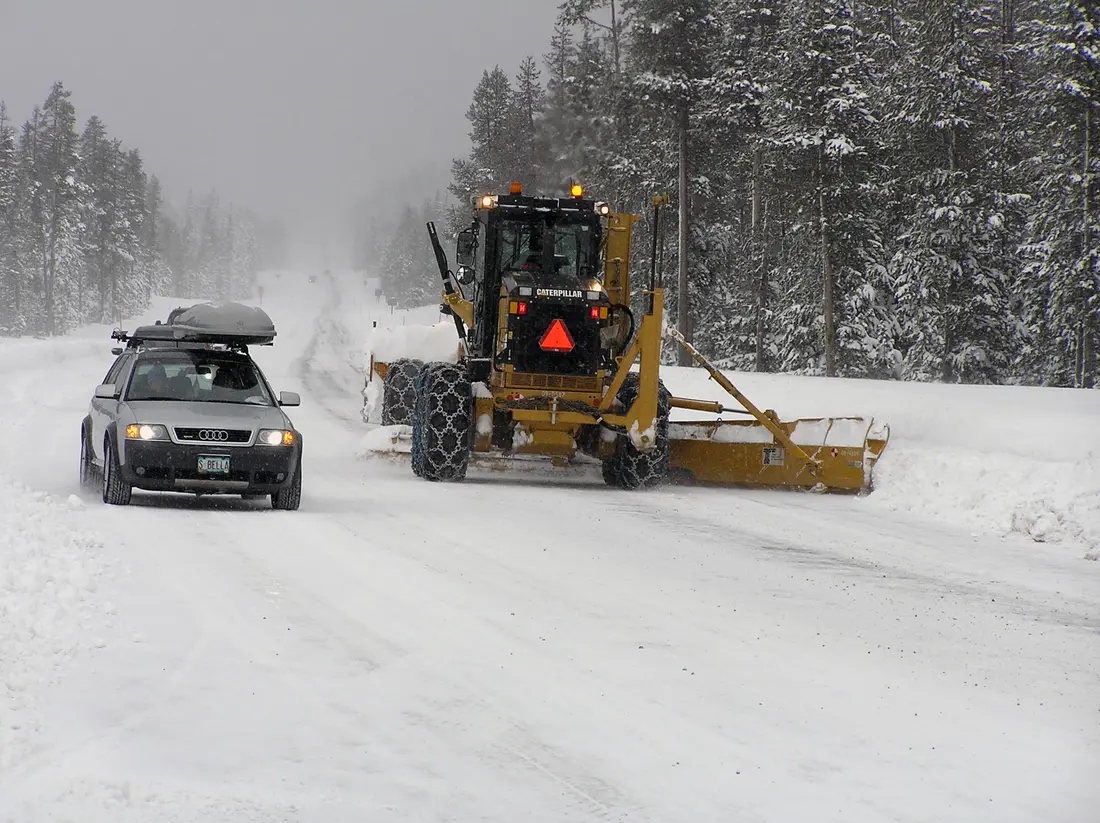
Photos: Oregon Department of Transportation via Wikimedia Commons (CC BY 2.0) and the U.S. Forest Service (public domain). Know a Bend snow crew we should check? Tell us.